
AI was expected to reduce the work of IT specialists. The opposite happened. Where the new work came from and why the human factor cannot be replaced.
Why AI did not replace IT support, where the new work came from and where the human factor cannot be replaced.
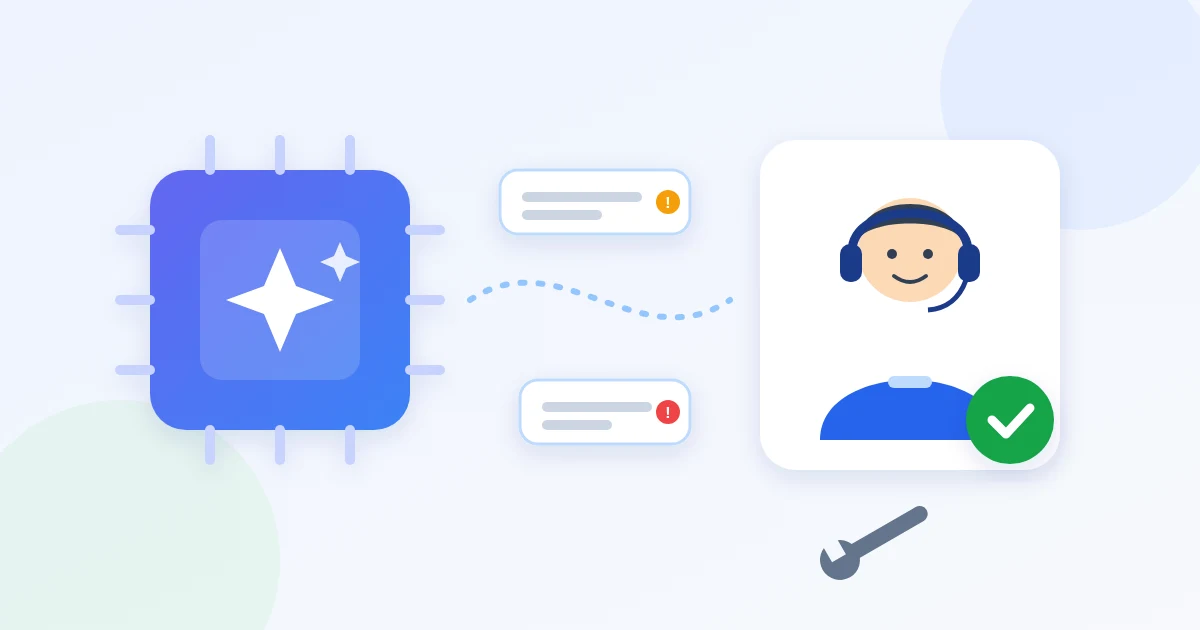
When AI assistants went mainstream, many people decided IT support was no longer needed. If the software writes scripts, configures routers and explains errors, why call a specialist? The logic looked simple: smarter tools, less work for people.
Our work doubled. The reason is that AI works well enough to give everyone the courage to try things themselves. This is where the new tasks come from:
People in every trade are excellent at their own work. IT is simply not their work, and AI does not change that.
The mechanic knows every car but has no patience to build a website and keep email running. With AI the site goes up in an evening, then stays without updates, without backups and with a contact form that sends requests to spam.
What we do: A website and email that work, stay updated and do not lose requests.
The dentist knows what a cavity is, but not what ransomware is. X-rays, records and the schedule are on one computer, and AI has suggested how to "share" them more easily.
What we do: Backups that can be restored and access only for those who need it.
There is a lot of sensitive information here: diagnoses, test results, personal data. Pasting text from a patient record into an AI chat to "summarise" it is a data leak.
What we do: Rules on which data may go through AI, and models that run locally.
The accountant knows every law, but the software, certificates and filing deadlines depend on computers nobody monitors. An AI script for "automatic backup" writes to the same disk.
What we do: Monitoring, backups in another place and certificates renewed on time.
Documents are confidential by law. Uploading a contract to a free AI assistant for a "quick check" can breach professional secrecy.
What we do: Clear rules and tools that keep documents inside the firm.
Work happens on sites and the team is spread out. Cameras, VPN and shared folders are set up "by AI" and left open to the internet with the default password.
What we do: A secure link between sites and cameras only you can see.
In all these cases AI gave an answer. What was missing was a person who knew what else was in that environment and who took responsibility.
We use it every day and would not go back. AI is excellent when it:
With it we get more done in the same time. That is why we take on more work.
Measured by a list of which tool has access to which data
How we do it: we take stock of AI services in the company and set rules for using them
Measured by the number of outages after system changes
How we do it: we check every change before it goes live
Measured by the time from alert to resolution
How we do it: AI for the analysis, a person for the decision
So far the opposite is happening. AI speeds up the work but also creates new tasks: more systems, more access and more settings to check.
For simple things, yes. For a company network it is wise to have someone check the setting, because AI does not know what else is in your environment.
It depends on the service and the data. Before you do, check where it is stored and whether it is used for training. For sensitive data there are models that run locally.
Yes, every day: for log analysis and first drafts of scripts and documentation. Decisions and changes to systems are made by a person.
The person who applied the suggestion. That is why nothing reaches a client's system without a check.
If you want to bring AI tools into your company without risking data and systems, start with a free review.
Head of IT Infrastructure & Security at Network Technology.

