
WireGuard vs OpenVPN for SMB: speed, security, setup, compatibility. See which VPN fits your team and use cases.
VPN solutions are a key element of modern cybersecurity, allowing employees to securely connect to the company’s internal network whether they are working from the office, from home, or on the go. This is especially important for small and medium-sized businesses that often lack a dedicated security team, yet still need to protect sensitive data and provide seamless access.
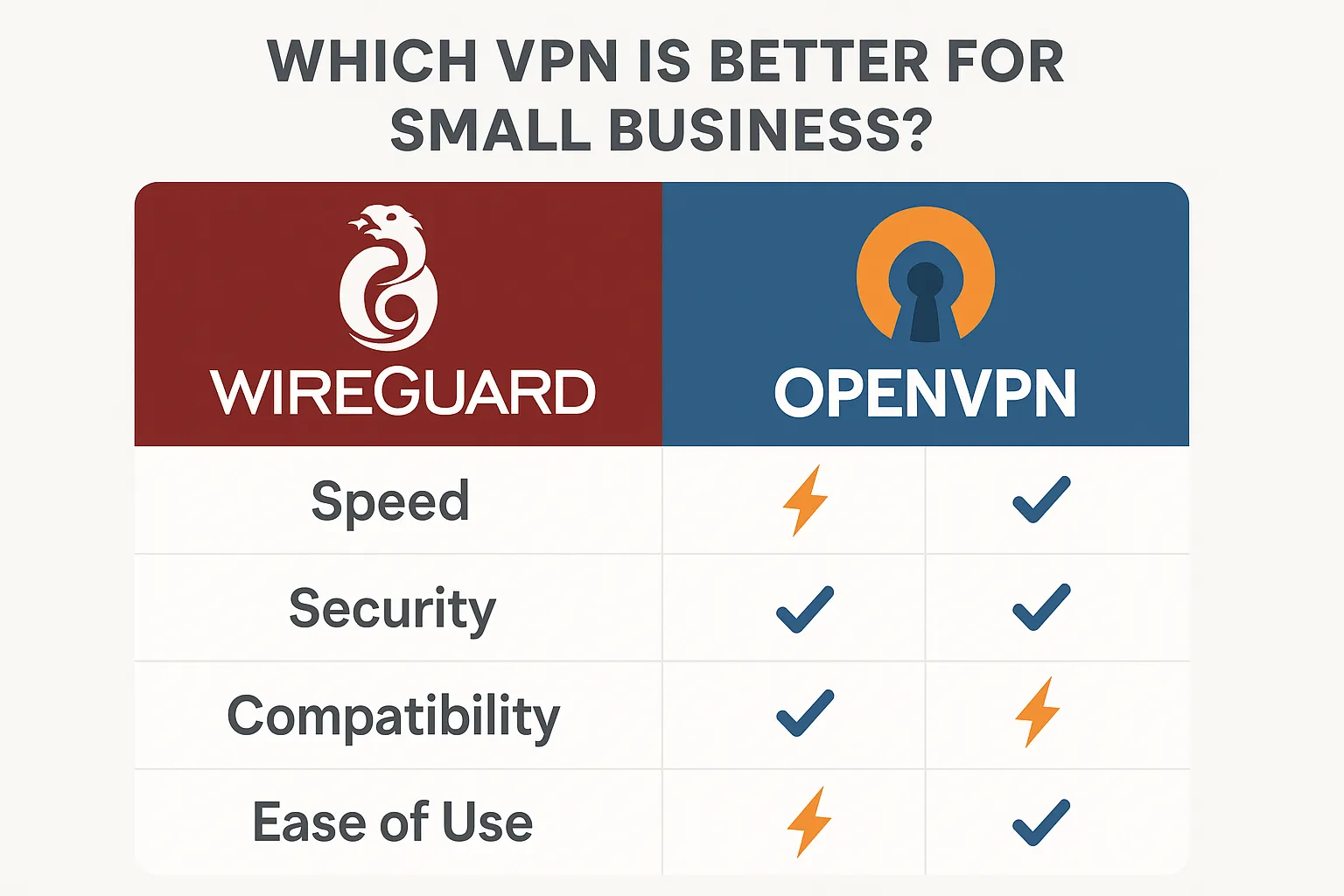
Here we compare WireGuard and OpenVPN across speed, security, ease of configuration, and compatibility to help you choose based on your environment. Planning virtualized VPN servers? Also see Proxmox vs VMware.
A VPN (Virtual Private Network) enables secure connections between employees and the company network, no matter where they are. This is especially important for businesses with remote teams, multiple offices, or the need for secure access to sensitive data.
WireGuard is a modern VPN protocol known for its simple code, high performance, and ease of configuration. It uses state-of-the-art cryptographic algorithms and has a much smaller codebase than OpenVPN, reducing the risk of vulnerabilities.
OpenVPN has been one of the most popular VPN solutions for over 20 years. It supports multiple algorithms, various operation modes, and has proven reliable in many environments. The downside is more complex configuration and heavier CPU usage.
For fast deployment, high performance, and simplicity, WireGuard is often the better choice. For maximum compatibility and advanced features, OpenVPN remains a reliable option. Many companies run both, depending on the scenario.
For SMBs we recommend:
Both WireGuard and OpenVPN are solid choices for secure access. The “right” option depends on your needs — speed and simplicity vs. universality and flexibility. If you’re unsure, our team can design the best-fit architecture for your case. Contact us for a short consultation.